
Product development for teams moving faster than their tech roadmap
We build the products and features your roadmap can't reach fast enough: new modules on what you already run, or the first version of something new. Shipped fast, scoped tight, and handed off to your team to keep building on.

.svg)
.svg)
.svg)
.svg)

.svg)
.svg)

.svg)
Your roadmap can't ship everything fast enough
The feature everyone's asking for is three quarters down the roadmap.
So the thing that would move the needle waits. Not because no one can build it, but because everyone who can is already committed to the core product.
Your product is live, but every iteration takes too long.
A product that can't iterate is already drifting from its market. The bottleneck isn't your roadmap. It's your build capacity.
The idea's validated. There's no dev capacity to build it.
Momentum is the one thing an early product can't get back. Every week it stays on a slide instead of in front of users is a week of learning you don't get.
Real features and real products, built to live next to what you already run
Whether it's the next feature on a product you run or a new product from scratch, we build the real thing: connected to your stack, scoped to what matters, and ready to ship.
New features
The capability your users keep asking for, built on top of your existing product and connected to your data.
Product modules
Tools that read and write to your CRM with no manual sync, no reconciliation.
Customer portals
A space where your customers log in, see their data, and act on it, connected to your backend.
Integrations
New connections between your product and the tools around it, so data moves without anyone copy-pasting.
SaaS MVPs
A first version of your software product: accounts, core workflow, and the one thing it has to do well.
Marketplaces
Two-sided platforms with listings, matching, and transactions, enough to test supply and demand for real.
Internal products
A new product launched inside an existing company, built without pulling your engineering team off the roadmap.
Custom
If what you're building doesn't fit a category above, we scope it from your use case.
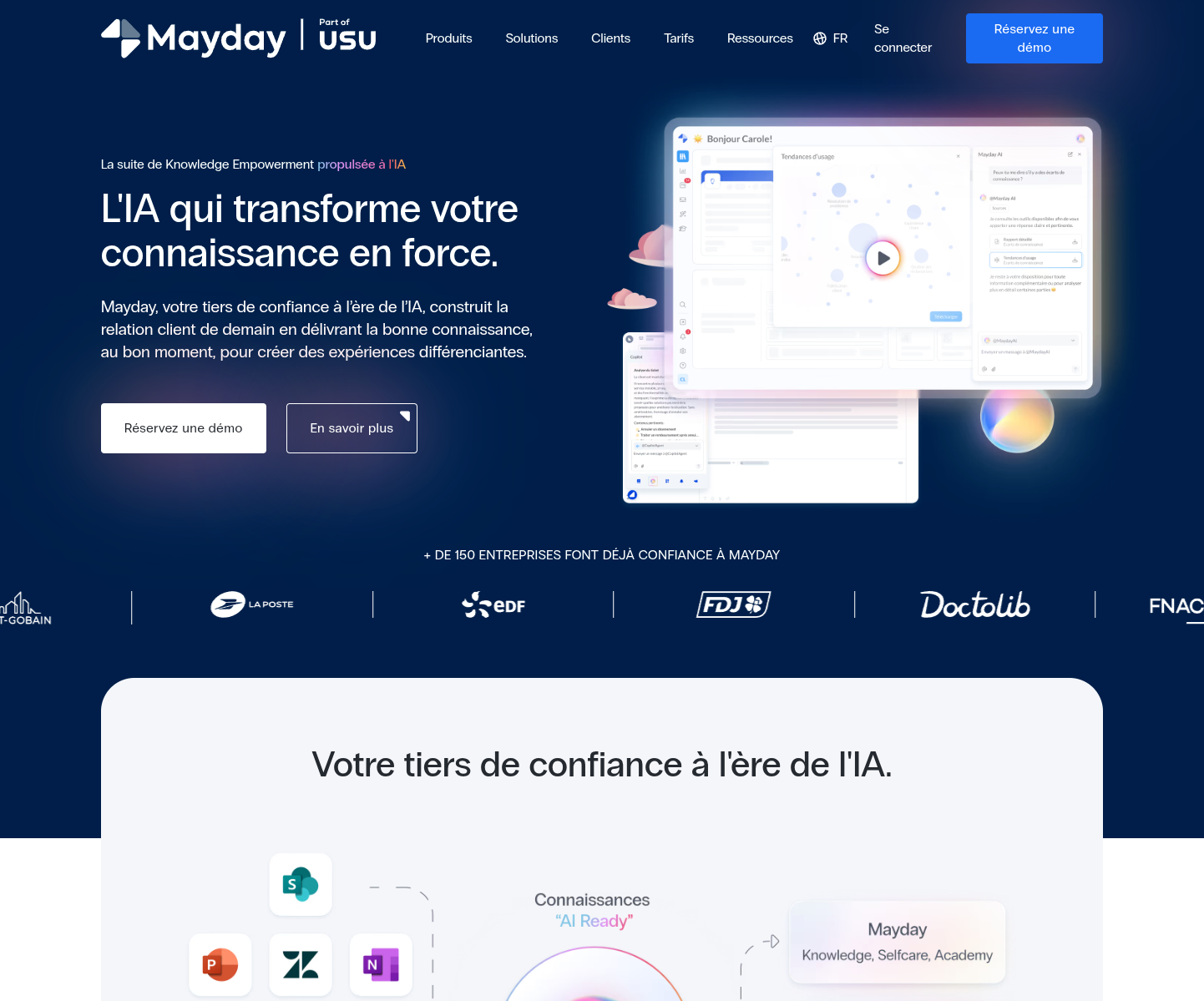
Mayday
Mayday is an intelligent knowledge-base SaaS for customer-service teams which needed its marketing site to express the seriousness of the product and speak precisely to each audience. Heka redesigned the key graphic elements, extended the new design direction across the full site, and rebuilt it in Webflow.
Ship fast without breaking what works
Three phases, one point of contact, zero subcontracting. You stay in the loop from the first call to the day you take over.
Discover.
We get to the business problem, not just the brief. You leave with a clear scope, timeline, and price before any build starts.
Build.
We build in the open: a weekly progress share, remote, so you see the work in flight and can steer it before launch.
Deliver.
We test, train your team, document the setup, and ship. You run it from day one.
Your existing stack, connected.
We connect anything you need to smoothen your workflows, from CRM and localization to analytics and automations.


.svg)


.png)





We’ll be there. Always.
The site is yours at handover. Everything your team needs to run it is included, and a direct line comes with it.
Slack or email
Questions after launch don't need a support ticket. Reach out directly, we reply.
Handover training
A live session before launch where your team learns every editable section of the site. You leave knowing how to run it.
Full documentation
CMS structure, component library, step-by-step how-tos. A reference your team can use long after we're done.
Extended team training
Additional sessions if more of your team needs onboarding beyond the handover.
Monthly maintenance
Prefer to delegate app management entirely ? We offer a retainer scoped to your app.
The questions teams ask first
A few things teams want to know before they reach out. If yours isn't here, put it in your message and we'll answer it.
Will a low-code build integrate with our existing product and stack ?
add
Will a low-code build integrate with our existing product and stack ?
Yes, that's most of what we do. We build on top of your product, reading and writing to your existing stack and data through APIs and integrations. The build plugs into what you already run; it isn't a separate island your team has to keep in sync by hand.
Does low-code add tech debt next to our existing product ?
add
Does low-code add tech debt next to our existing product ?
Less than you'd expect, and never a black box. We document how it's built and hand it off, so your engineers can read it, change it, or take it over. Low-code is still real development, faster to build and easier to maintain, not a shortcut that leaves a mess.
Is this actually faster than waiting for our roadmap or hiring a contractor dev ?
add
Is this actually faster than waiting for our roadmap or hiring a contractor dev ?
For the right scope, yes. We ship in 4–8 week sprints without competing for your engineers' time or spending weeks onboarding a contractor to your codebase. You get the feature or module while it still matters, not three quarters from now.
Who owns and maintains the build after delivery ?
add
Who owns and maintains the build after delivery ?
You do, completely, from day one. No lock-in, no held-back source. We document everything so your team or your own engineers can run and extend it. If you'd rather we keep iterating, we can, by choice, not because you're stuck with us.
Is a low-code MVP good enough to put in front of real users ?
add
Is a low-code MVP good enough to put in front of real users ?
Yes, that's the point. We build a working product with real accounts, real data, and a real core workflow, so the feedback comes from people actually using it. Low-code is how we get there in weeks instead of quarters, not a throwaway prototype.
Will low-code hold up as the product grows ?
add
Will low-code hold up as the product grows ?
For launching, validating, and shipping fast, it holds up well past where most teams expect. When a product outgrows it (scale, performance, or complexity) we tell you plainly and help plan the move to custom code. We'd rather flag the ceiling early than pretend it isn't there.
How much does it cost ?
add
How much does it cost ?
Scope determines cost: a single feature and a two-sided marketplace are not the same project. We define scope in the Discovery call, cut to what matters, and give you a number before any build starts. Describe what you need and we'll scope it together.