
Internal tools built for ops teams tired of waiting on a developer
We build internal tools, approval workflows, and ops dashboards connected to your existing stack

.svg)
.svg)
.svg)
.svg)

.svg)
.svg)

.svg)
The bottleneck isn't your team.
It's everything they're waiting on.
Your team runs operations on spreadsheets and email chains
Every change, however small, goes back to whoever built it. Your team has lost control of its own site.
Every form, dashboard, or approval flow goes into a backlog
Pages stay outdated. Campaigns launch late. The bottleneck isn't strategy — it's access.
You had a tool built. It works, but nobody can update it.
Whoever built it is long gone. Every change, however small, goes back to a developer. You've traded one spreadsheet dependency for another kind.
Ops tools your team can actually run
We build the internal layer that turns your manual processes into something reliable. Not a black box, but something your team can own, without a permanent dev dependency.
Ops dashboards
Views of what matters to your team, built around your data.
CRM integrations
Tools that read and write to your CRM with no manual sync, no reconciliation.
Data sync
Keep your sources aligned : Airtable, Sheets, Notion, or any combination.
Notification systems
Alerts and updates delivered where your team already works : Slack, email, or both.
Approval workflows
Multi-step approvals with routing, notifications, and audit trails.
Custom
If what you're building doesn't fit a category above, we scope it from your use case.
Mayday
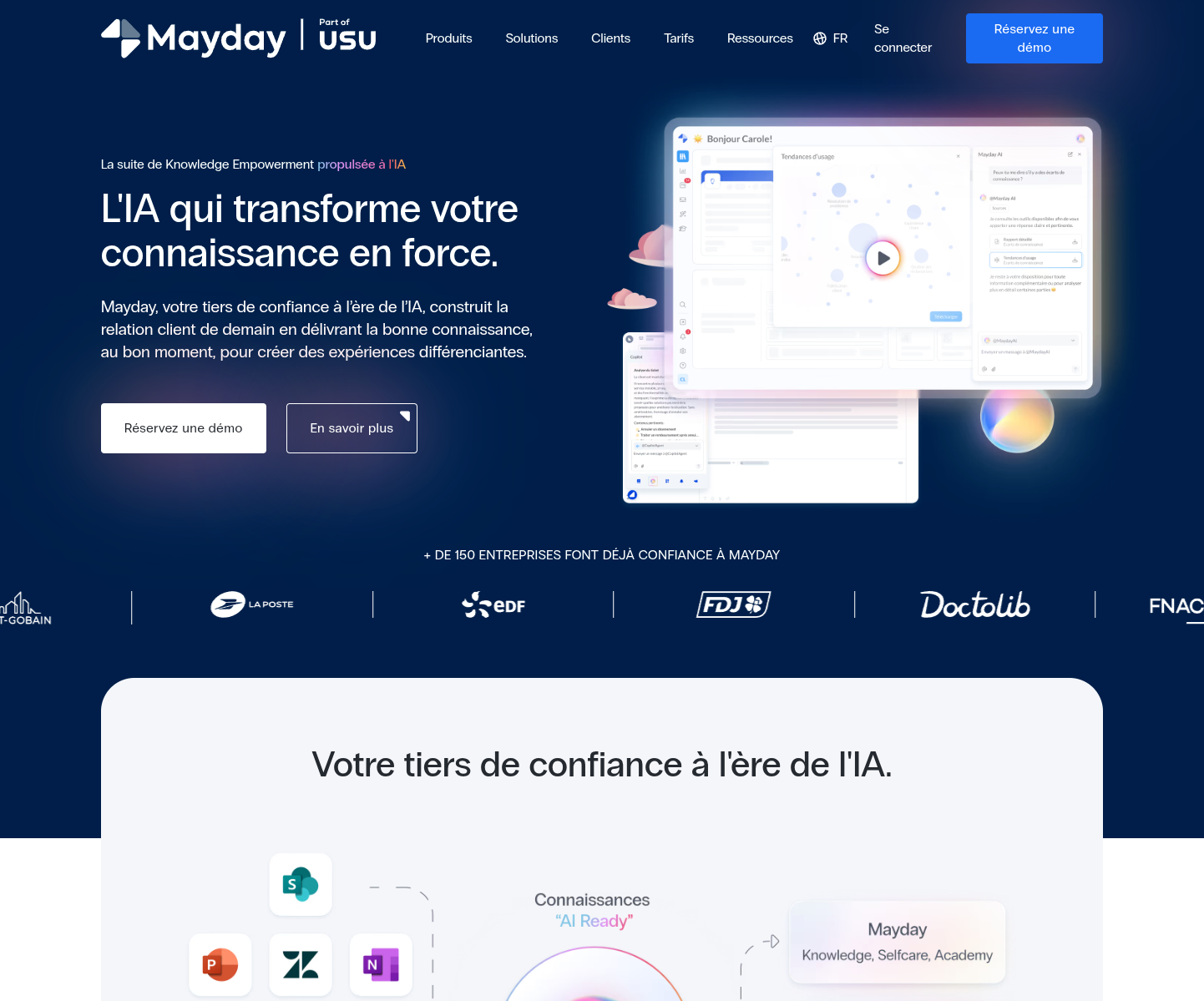
Mayday is an intelligent knowledge-base SaaS for customer-service teams which needed its marketing site to express the seriousness of the product and speak precisely to each audience. Heka redesigned the key graphic elements, extended the new design direction across the full site, and rebuilt it in Webflow.
Ship fast without breaking what works
Three phases, one point of contact, zero subcontracting. You stay in the loop from the first call to the day you take over.
Discover.
We get to the business problem, not just the brief. You leave with a clear scope, timeline, and price before any build starts.
Build.
We build in the open: a weekly progress share, remote, so you see the work in flight and can steer it before launch.
Deliver.
We test, train your team, document the setup, and ship. You run it from day one.
Your existing stack, connected.
We connect anything you need to smoothen your workflows, from CRM and localization to analytics and automations.


.svg)


.png)





We’ll be there. Always.
The site is yours at handover. Everything your team needs to run it is included, and a direct line comes with it.
Slack or email
Questions after launch don't need a support ticket. Reach out directly, we reply.
Handover training
A live session before launch where your team learns every editable section of the site. You leave knowing how to run it.
Full documentation
CMS structure, component library, step-by-step how-tos. A reference your team can use long after we're done.
Extended team training
Additional sessions if more of your team needs onboarding beyond the handover.
Monthly maintenance
Prefer to delegate app management entirely ? We offer a retainer scoped to your app.
The questions teams ask first
A few things teams want to know before they reach out. If yours isn't here, put it in your message and we'll answer it.
What's the difference between low-code and no-code ?
add
What's the difference between low-code and no-code ?
No-code tools let non-technical users build by dragging and dropping. Low-code gives a developer more control over logic, data, and integrations while staying faster and cheaper than custom development. We use low-code when the requirement is real: your tool needs to talk to your stack, handle exceptions, and stay maintainable without a full dev team.
Can our team maintain the tool after delivery ?
add
Can our team maintain the tool after delivery ?
Mostly, yes. And that's by design. Your team runs the tool day-to-day without any developer involvement : adding entries, running workflows, reading dashboards. Technical maintenance (dependency updates, integration health checks) is periodic, not constant. We document everything so that when occasional dev input is needed, it's a quick check, not a full engagement. If you'd rather delegate that entirely, we offer a maintenance retainer.
How long does a low-code tool take to build ?
add
How long does a low-code tool take to build ?
Typically 4–8 weeks per sprint, depending on scope. The first sprint covers the core workflow, what your team needs to stop doing manually today. Additional functionality is added in subsequent sprints if needed. We define the scope in the Discovery phase before any build begins.
What kind of tools do you build ?
add
What kind of tools do you build ?
Approval workflows, intake forms, ops dashboards, CRM integrations, data sync tools, notification systems, anything that turns a manual process into something reliable. If it currently lives in a spreadsheet, an email chain, or a Notion database with too many tabs, it's probably in scope.
How much does a low-code tool cost ?
add
How much does a low-code tool cost ?
Scope determines cost. A simple intake form and a multi-step approval system with CRM integration are not the same project. We define scope in the Discovery call, that's where we map your current process, agree on what gets built, and give you a number. Describe your tool and we'll scope it together.